

Dear friends and supporters,
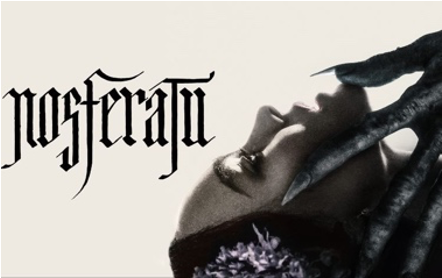
The recent remake of Nosferatu is a conspicuous theological and worldview venture, exceeding its cinematic predecessors in its religious premises, as well as in its ghastly sexual violence. The narrative broadly follows Bram Stoker’s chilling 1897 novel Dracula and the compelling 1922 and 1979 (and countless other) cinematic versions of the well-known gothic horror. Roger Eggers’ current version brings to the forefront the religious and metaphysical questions surrounding good and evil in ways rarely presented in modern cinema. This is most evident in the views expressed by Professor Albin Eberhart Von Franz, played convincingly by the talented Willem Dafoe. Von Franz, a strange combination of Christian and occultist, is hounded out of the academy for believing in just the sort of paranormal reality the ferocious Nosferatu (Count Orlock, the Dracula character, played terrifyingly by Bill Skarsgård) instantiates. At one point the main character Ellen Hutter, played by Johnny Depp’s gifted daughter Lily-Rose Depp, and Nosferatu’s horrifying blood-lust interest in a small German town, inquires of Von Franz, “Professor, my dreams grow darker… tell me, does evil come from within us? Or beyond?” (Both, actually.)
We know from the moment Orlock first appears on screen in his foreboding Romanian castle to which Ellen’s husband Thomas (Nicholas Hoult) has been dispatched to secure his signature for a home purchase back in Germany that he is purely diabolical. Gradually we learn that Satan has given the Count the grim gift of vampirical immortality. His task is as gruesome as it is simple: to destroy humanity by consuming its life’s blood. Orlock says, “I am an appetite, nothing more.” He is a Satanic agent of consumptive destruction.
Christus Victor
Nine years after the 1922 silent film Nosferatu: A Symphony of Horror a book titled Christus Victor appeared by Swedish theologian Gustaf Aulén.[1] It was a slender work with an audacious thesis: the Western church, first primarily under the influence of Anselm, erroneously shifted from the biblical and patristic idea of Christ’s death as the triumph over Satan and sin and evil powers to a highly individualized, “objective” theory of the atonement as deliverance from the guilt of sin. In this latter view, God is diverted from his anger at man’s disobedience by his Son’s substitutionary satisfaction on the cross: “God is the object of Christ’s atoning work, and is reconciled through the satisfaction made to His justice.”[2] Christ died to save individual sinners from the guilt and corruption of sin. By contrast is (allegedly) the older and more biblical “dramatic” view: “Atonement as a Divine conflict and victory; Christ — Christus Victor — fights against and triumphs over the evil powers of the world, the ‘tyrants’ under which mankind is in bondage and suffering, and in Him [Christ] God reconciles the world to Himself.”[3]
In the “objective” view, Jesus reconciles the sinner to a just God. In the “dramatic” view, God in Christ crushes the powers enslaving sinners in their sin and corruption — and in this way God saves not just individuals, but delivers the world itself from Satanic bondage.Romans 13 and assume everything about it must equally apply in every political situation in history.

This book sets forth simply and clearly the role of the is state and politics in the Christian worldview. It is designed not so much as a reaction to specific ecclesial or sociopolitical developments as it is a collaborative statement of a distinctly Christian view of the state and politics. We can rejoice that since the 70s many Christians have abandoned the political retreatism and pietism that stamped conservative Protestantism for the first half of the 20th century and entered the political fray with reckless abandon. Unfortunately, the melding of their abandonment of early political withdrawal with their abandonment of intelligent, principled activism has not yielded the Christian political victories they might have hoped for.
Get the book here.
Aulén overinflated his thesis. It was wrong not so much in what it asserted (the drama of Christ’s world-liberating victory over Satan) as in what it denied (the substitutionary atonement for men’s sins). The Bible teaches both. As the OT sacrificial system makes plain, death for sin is substitutionary (Lev. 4:20; 16; 17:11), and from the NT we learn Christ died as just that substitute (Jn. 1:29; 1 Pet. 2:21–25). The Bible also and equally teaches that our Lord triumphed over Satan and the forces of evil on the cross (Col. 2:13–15; Heb. 2:14–15; 1 Jn. 3:8).[4] By his atoning death our Lord substituted for our sins, bearing and releasing us from the penalty we deserved, and he triumphed over Satan and the powers and began rolling back the curse of Eden on his “very good” creation. On the cross (and from the empty tomb [1 Cor. 15:22–28, 54–57]) Christ vanquished the Satanic powers that enslave man in guilt and all creation in corruption.
Christus Victor or Nosferatu
In the current Nosferatu movie, Ellen in the end sacrifices herself to the murderous blood-lust of Orlock to destroy him as the first rays of the sun blanket and disintegrate his grotesque body draped over her, and in this ultimate sacrifice she spares the world of his horrendous depredations. It is world salvation by sacrifice, with Christus Victor hovering in the background.
Since man’s Fall, the cosmic war has been between the Triune God and his angels and the blood-redeemed saints on the one side, and Satan and his demons and unredeemed humans on the other. The decisive battle of this cosmic war was won in the sacrifice of God’s Son on the cross and his victorious bodily resurrection on that first Easter morning. But the fact the decisive battle has been won does not mean the war is over. Just as the victory of World War II in Europe was assured after the successful D-Day invasion though bloody battles still lay ahead, so individual and cultural battles remain to be fought today despite the pivotal redemptive victory secured by Jesus Christ.[5]
Satan, aware his time is short (Rev. 12:12), unleashes the Nosferatu spirit in his fury. He is the consummate consumptive destroyer: in stark contrast to Christ the life-giver, Satan is a thief who “comes only to steal and kill and destroy” (Jn. 10:10). He aims to rob humanity of its dignity, its love, its fidelity, its joy, and its hope — little by little the Nosferatu sucks the life’s blood from sinners until they are virtual walking corpses. Whether it is addiction to painkillers or hard drugs or alcohol or illicit sex or insatiable avarice or desiccating bitterness or insurmountable self-pity, sinful man is putty in the hands of Satan’s Nosferatu, who sadistically consumes — and then destroys.
Conclusion
The question facing every generation is both stark and unavoidable: the victorious, life-giving Christ, or the life-draining Nosferatu. There are no third options. Christ or Nosferatu. Choose one. ✞
Personal
Sharon and I were at Liberty Baptist in Norwalk, CA a couple of weeks ago, where I was privileged to have been asked to speak twice on the church‘s and Pastor Max H. Graves Jr.’s 25th anniversary. Max has become a dear friend, and he is a mighty man of God, and his wife Leslie God’s woman. 

Next time I hope to write on “Christianity – Jewishness = Christianity.
While liberals ordinarily overemphasize the “already” of the already/not yet, conservatives tend to overstress the “not yet.”
A pox on both their houses.
Listen to the message here.
More great stuff
The Center for Cultural Leadership site is here.
My Amazon author page (print and digital) is here.
My I-Tunes sermons, lectures and podcasts are here.
You can find my sermons and lectures at my YouTube channel.
Sign up to get my blog updates here.
Here’s my Twitter feed.
If you want to get the free exclusive hard copy publication Christian Culture, please send me a Facebook private message.
The CCL phone number is 831-420-7230.
The mailing address is:
Center for Cultural Leadership
P. O. Box 100
Coulterville, CA 95311
[1] Gustaf Aulén, Christus Victor (London: SPCK, 1931).
[2] Gustaf Aulén, Christus Victor, 18.
[3] Gustaf Aulén, Christus Victor, 20.
[4] Henri A. G. Blocher, “Agnus Victor: The Atonement as Victory and Vicarious Punishment,” What Does It Mean to Be Saved? John G. Stackhouse, ed. (Grand Rapids: Baker, 2002), ch. 3
[5] Oscar Cullmann, Christ and Time (Philadelphia: Westminster Press, 1950), 84.

