


[F]or if we live, we live for the Lord, or if we die, we die for the Lord; therefore whether we live or die, we are the Lord’s. For to this end Christ died and lived again, that He might be Lord both of the dead and of the living.
Rom. 14:8-9
Dear friends and supporters:
The Bible weds Christ’s death and resurrection so inextricably it’s nearly impossible to consider one without the other. It’s true that an occasionally overbalanced understanding of this combination blends his death and resurrection, such that the significance of each is overlooked. But Christ’s death did not accomplish precisely what his resurrection did, and vice versa. Each has its own role to play in redemptive history.
This is not, however, the most widespread problem as Christians consider the relation between these two great redemptive events. Rather, they tend to regard them as nearly isolated, and thus lose one of the most important truths of the gospel: Christ’s death was an Easter crucifixion, and his resurrection brought back to life Christ crucified. It is no casual detail that our Lord‘s resurrection body bears the wounds of his death — the nail holes in his hands and feet and the spear fissure in his side (Jn. 20:24-29; cf. Lk. 24:36-39). The fact our Lord’s resurrection body will eternally carry the most demonstrable wounds of his death might seem inexplicable and even grotesque, but it exhibits indisputably the unity of his death and resurrection.
Substitutionary Atonement Insufficient
One of the most common instances of erroneously separating crucifixion from resurrection is the assumption that Christ’s payment of our sin-debt on the cross suffices to save us. Many Christians seem to believe that since Christ suffered and died on the cross for our sins (substitutionary atonement), all of our sins now paid for, we stand justified (declared righteous) before God: “I’m saved because Jesus paid for my sin.” Paul certainly did not hold this view. He wrote:
[I]f Christ has not been raised [from the dead] then our preaching is vain, your faith also is vain. (1 Cor. 15:14)
Had Christ completely paid our sin-debt on the cross yet remained his tomb, we could not experience the gift of eternal life and could never be justified. Only a crucified and risen Lord can save us. This is because while Christ’s crucifixion pays the penalty for sin, his resurrection overcomes the power of sin. And we are saved, not only from sin’s penalty but also from its power.
ReformCon Next Thursday

See you there. Get tickets here.
Again and again in his teaching, Christ linked his crucifixion to his resurrection. On one of the most notable occasions in John 2, he declared to the unbelieving Jews as well as to his disciples:
“Destroy this [Jewish] temple, and in three days I will raise it up.” The Jews then said, “It took forty-six years to build this temple, and will You raise it up in three days?” But He was speaking of the temple of His body. So when He was raised from the dead, His disciples remembered that He said this; and they believed the Scripture and the word which Jesus had spoken. (vv 19-22)
The unbelieving Jews and Romans destroyed the temple of his body, but in three days God raised it up.
The Crucified-and-Resurrected Cosmic Lord
The apostle Paul enlists this crucifixion-resurrection unity in Romans 14 to make one of the most vital points in the Bible: Christ died and rose precisely so that he could be Lord over both the living and the dead. Because Christ knew what it was to live, and knew what it was also was to die, he could be Lord over both. This in fact is likely the fundamental reason for Christ’s redemption: not to take sinners to heaven when they die, or even to pay for our sins. Rather, he died to become Lord of all humanity, and in this exalted position of Lordship his crucifixion-resurrection becomes efficacious to all believers and places all beings in heaven and earth under his authority (Phil. 2:5-11). It’s the crucified-resurrected Christ that is Lord.
Yet no biblical text declares this more emphatically than Peter’s Pentecostal sermon in Acts 2. After recounting Christ’s recent death, resurrection, and ascension, he preaches:
This Jesus God raised up again, to which we are all witnesses…. Therefore let all the house of Israel know for certain that God has made Him both Lord and Christ —this Jesus whom you crucified.” (vv. 32, 36)
God resurrected the crucified One for one chief, overarching purpose: to be the cosmic Lord. This Lord is not only risen. He died by crucifixion, and not only by crucifixion, but an atoning, substitutionary crucifixion. Therefore, his Lordship is a redemptive Lordship. He is not simply a King who rules by might. He is a King who rules by redemptive, saving power. The King redeemed us, and then he rules us. He equally rules unbelievers, but only in a providential and not a redemptive sense. We cannot speak of this King as only the ever-living one. Nor can we consider him as only the redemptive-crucified One. We can speak of him only as the crucified-and-resurrected One.
No Good Friday “Bitter Herb”
The severing of crucifixion from resurrection is not simply theoretically false; it creates practical failures. Years ago I was preaching at a Good Friday service, and the pastor of the host church made it very clear to me into the other speakers that we must not show any joy or gladness, but merely the “bitter herb” of Christ’s death. The time for rejoicing was on Easter Sunday, he intoned. He was wrong. The Good Friday Lord is also the resurrected Lord, just as the resurrected Lord is the crucified Lord. When we disallow any joy and rejoicing on Good Friday, we bifurcate the Lord. But Christ is not divided.
Our Lord implicitly directed himself to this division of his redemptive work. To the two Emmaus disciples who were downcast and distraught early on Easter morning and unaware they were speaking to the crucified-and-risen Lord. He sternly reprimands them:
“O foolish men and slow of heart to believe in all that the prophets have spoken! Was it not necessary for the Christ to suffer these things and to enter into His glory?” (Lk. 24:25-26)
The crucified Lord was – and was always intended to be – the risen Lord. And if he found their sadness and moroseness inexcusable, how much more inexcusable would he find ours on Good Friday!
Conclusion
This Holy Week let us rejoice equally in the crucified and resurrected Lord. He died for our sins according to the Scriptures, bearing in his own body our own transgressions, and wiping away our sin-debt. And he rose the third day according to the Scriptures, raised for our justification, breaking the power of sin in our lives and securing the divine verdict of “not guilty” over him and us, and over us — precisely because it was delivered over him.1
Easter crucifixion and cruciform resurrection are an indissoluble unity celebrated every Holy Week.✞
Personal
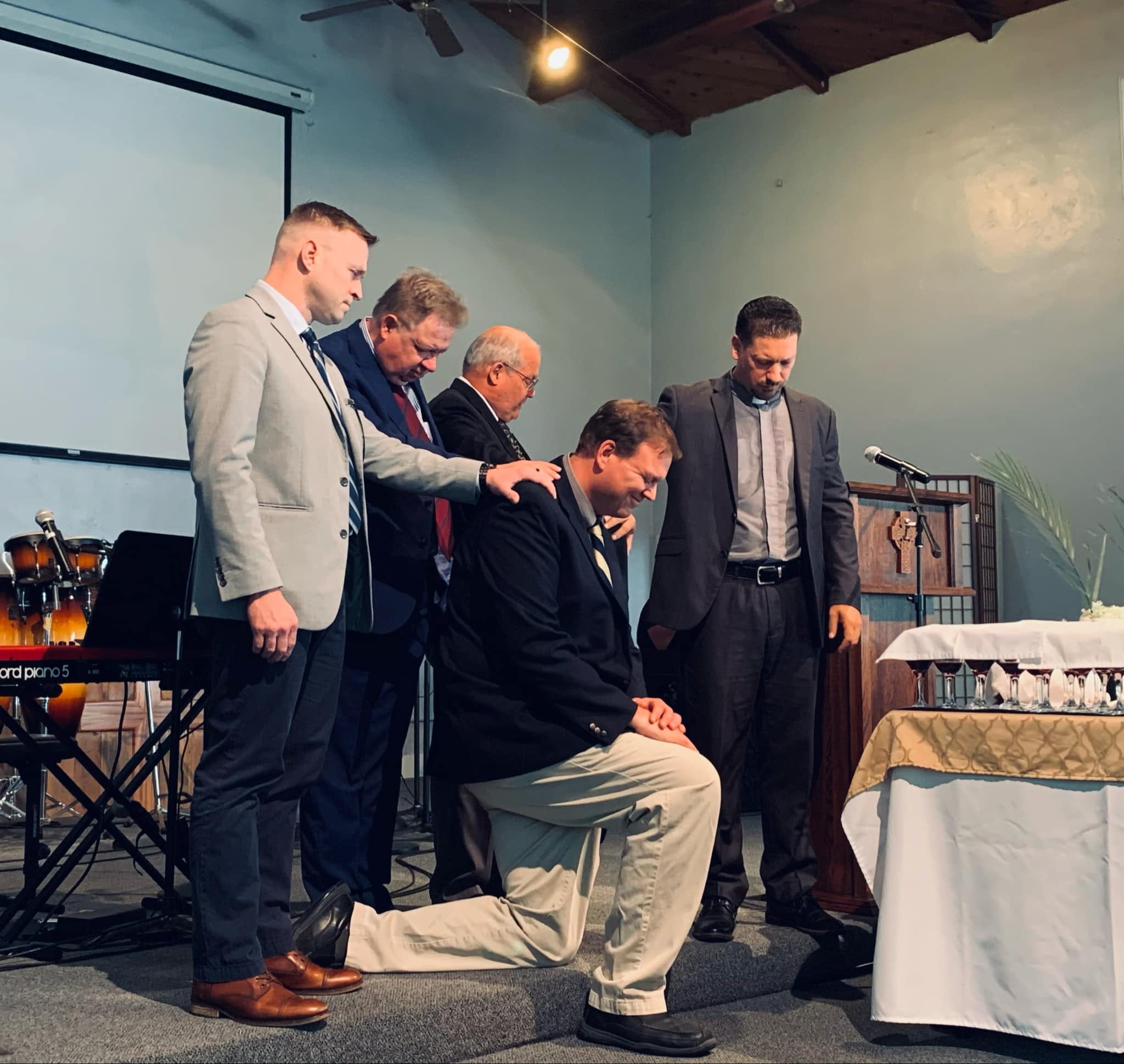
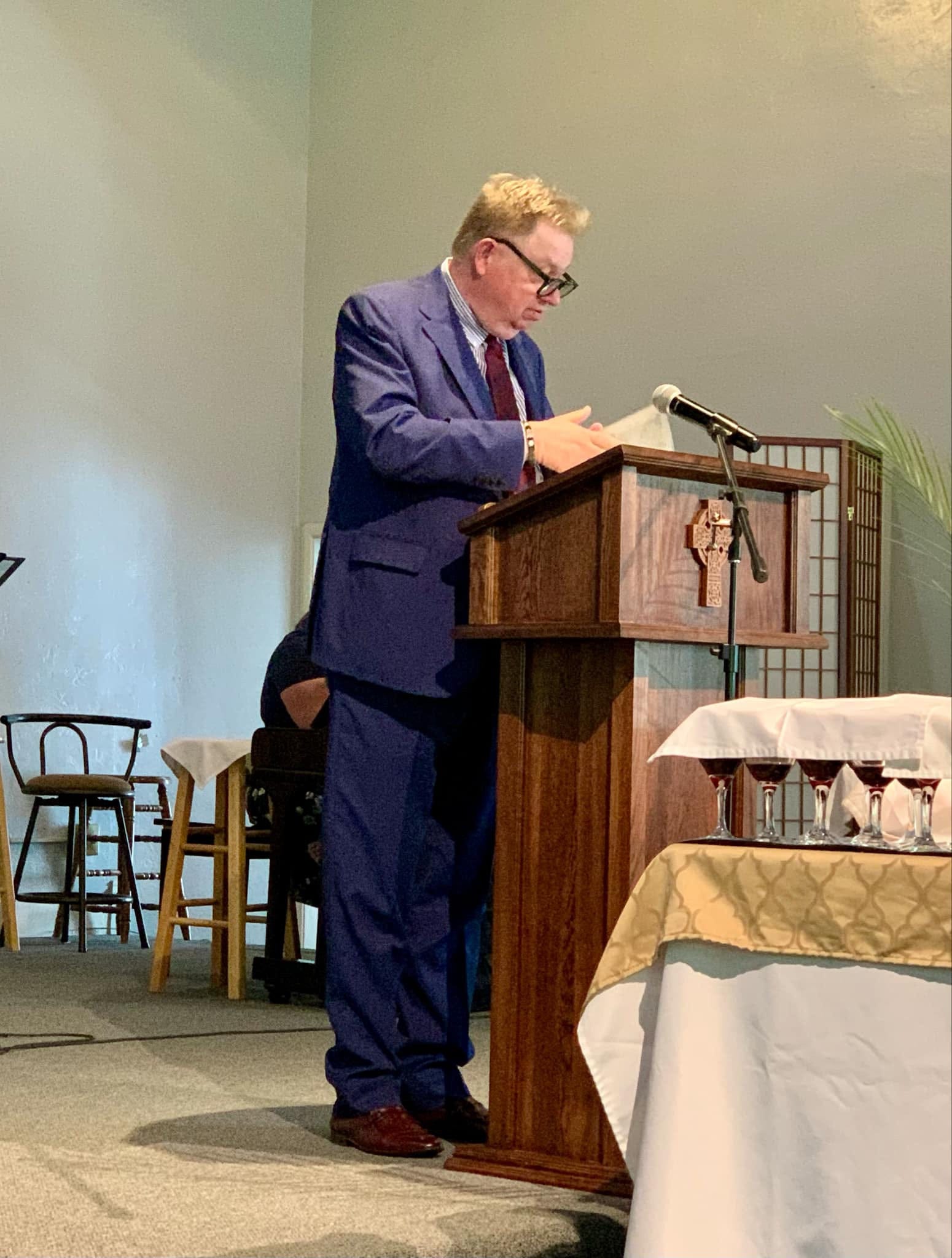
It was my privilege last Sunday afternoon to deliver the ordination charge to Jeff Lambin, planting Reformed Church of the Sierras in Carson City, Nevada. The commissioning church and site for the ordination was Church of the King-Sacramento led by Pastor John Stoos, founder and now pastor emeritus, and the current senior pastor Paul Liberati, both of them dear friends of mine. It’s hard to believe I was the first guest speaker invited to preach at Church of the King 20+ years ago.
Later this week I hope to post a special Easter article.
Happy Holy Week,

Silver Anniversary Celebration
CCL is celebrating its 25th anniversary this year. Our Silver Anniversary Celebration will be in San Francisco December 6. Because of space limitations, attendance is capped at 175. This will be a once-in-a-lifetime event. Please text Elise Kloster at 214-846-0521 to reserve your place. Interested teenagers are invited. More details later.
Gary DeMar’s Rejection of Jesus’ Future 2nd Coming
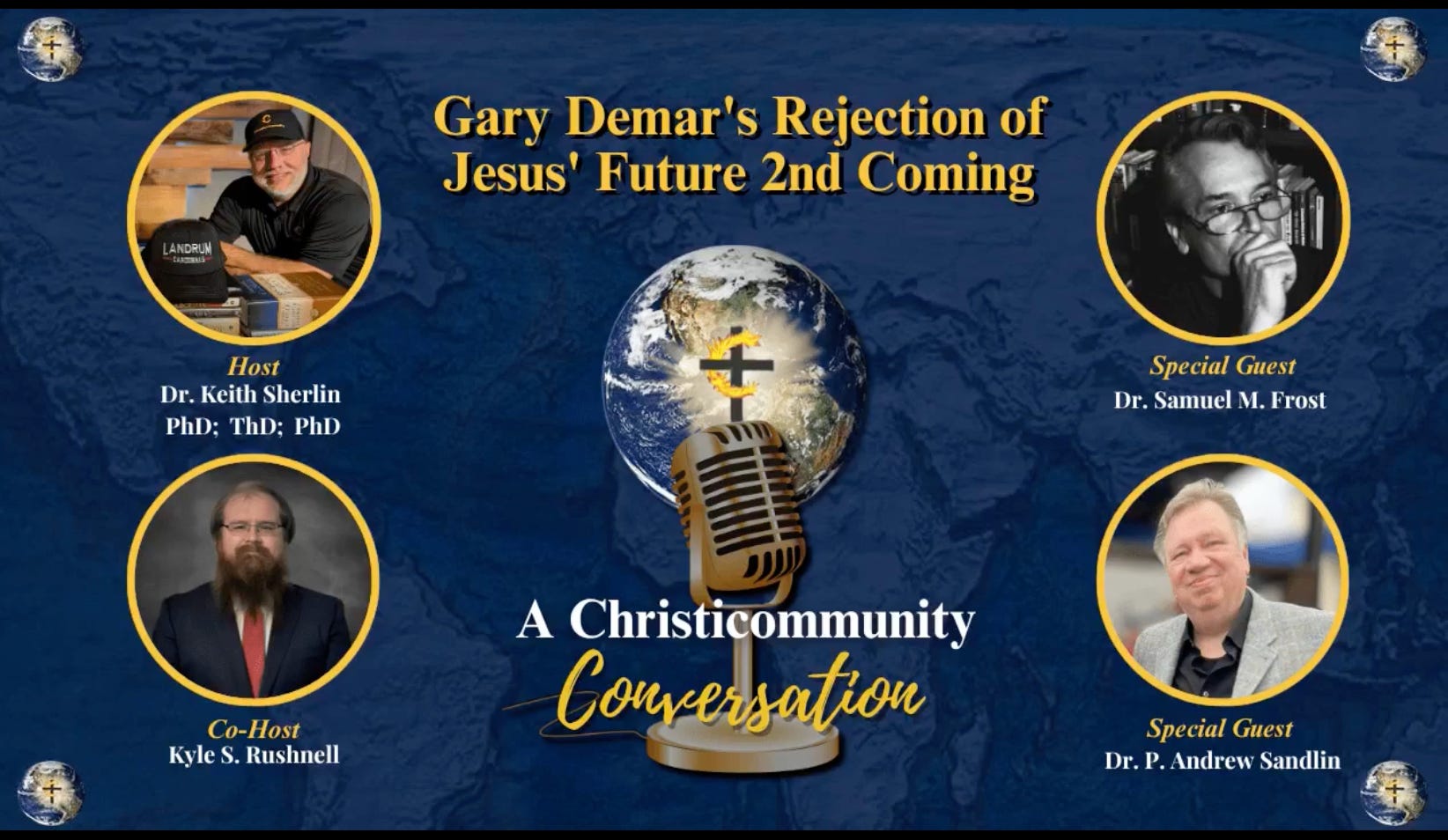
Over the past year or two, Gary DeMar has been drifting into serious theological sin by his rejection of basic Bible truth on the future Second Coming of Jesus Christ. The future, physical, Second Coming of Christ to earth has been the hallmark of gospel believers since the earliest eras of church history. Several teachers in this Conversation discuss this recent trend in Demar and the dangers of it.
Listen here.
More great stuff
The Center for Cultural Leadership site is here.
My Amazon author page (print and digital) is here.
My I-Tunes sermons, lectures and podcasts are here.
You can find my sermons and lectures at my YouTube channel.
Sign up to get my blog updates here.
Here’s my Twitter feed.
If you want to get the free exclusive hard copy publication Christian Culture, please send me a Facebook private message.
The CCL phone number is 831-420-7230.
The mailing address is:
Center for Cultural Leadership
P. O. Box 100
Coulterville, CA 95311
Michael F. Bird, The Saving Righteousness of God (Paternoster: Colorado Springs, 2006), 40-59.

